


it started in the jungle
I was in Costa Rica for a mushroom ceremony, eye mask on, deep in it. East Forest was playing live for us in the jungle. Grasshoppers, howler monkeys, the ocean somewhere past the trees. Then a flute came in, and it shook me right out of my eye mask. I had to see what instrument it was.
It was a Native American flute.
When I got home I found one online. A 3D printed one. It didn't last more than a month. I needed wood. Something made with real hands.
Now there are 18 flutes in my house! Native flutes in cedar and walnut, double drone flutes, quenas, a shakuhachi, ocarinas. A few of them come from High Spirits in Patagonia, Arizona, a workshop I've also had the honor of designing for.
a tool I actually use
Recording a flute is harder than it sounds. Especially where I live in San Diego. With flutes, the breath is part of the beauty. You hear the air moving across the instrument right alongside the note. On a recording, that breath either takes over or gets scrubbed out, and the usual fixes take the life out of the tone along with it.
I wanted my recordings to sound the way a flute feels when you're sitting next to it. I couldn't find anything that did that. So, per usual, I just went ahead and built it.
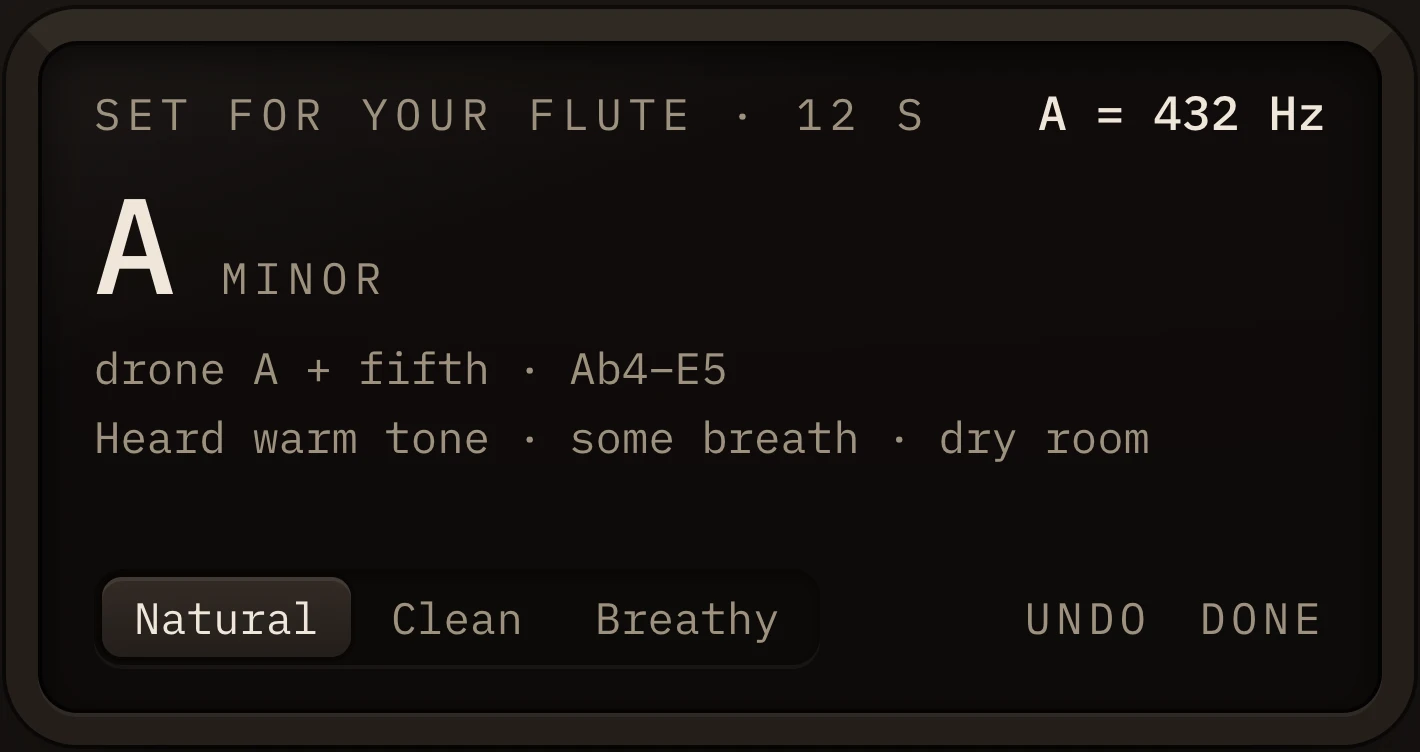
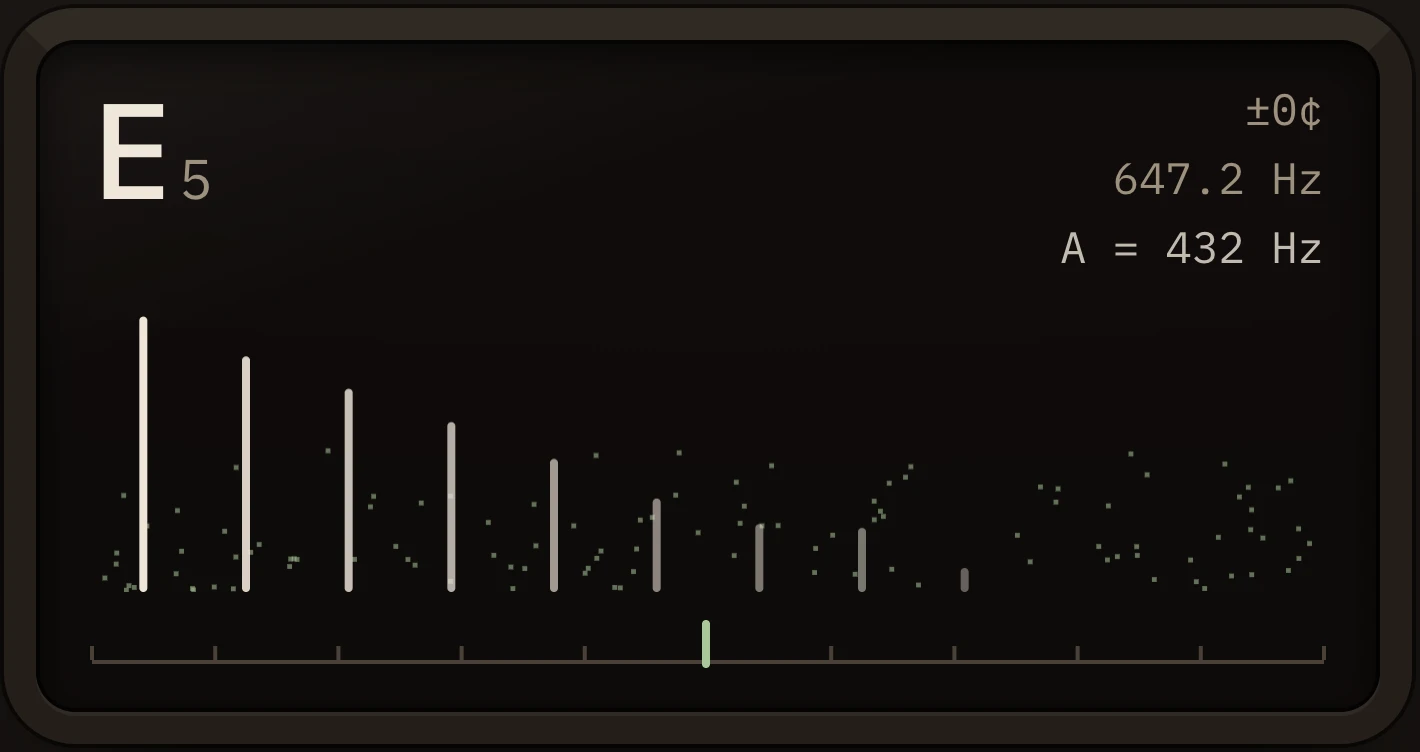
Afflato hears your breath apart from your tone, so you decide how much of each comes through. Press Soundcheck, play a melody, and it sets everything up for your flute.
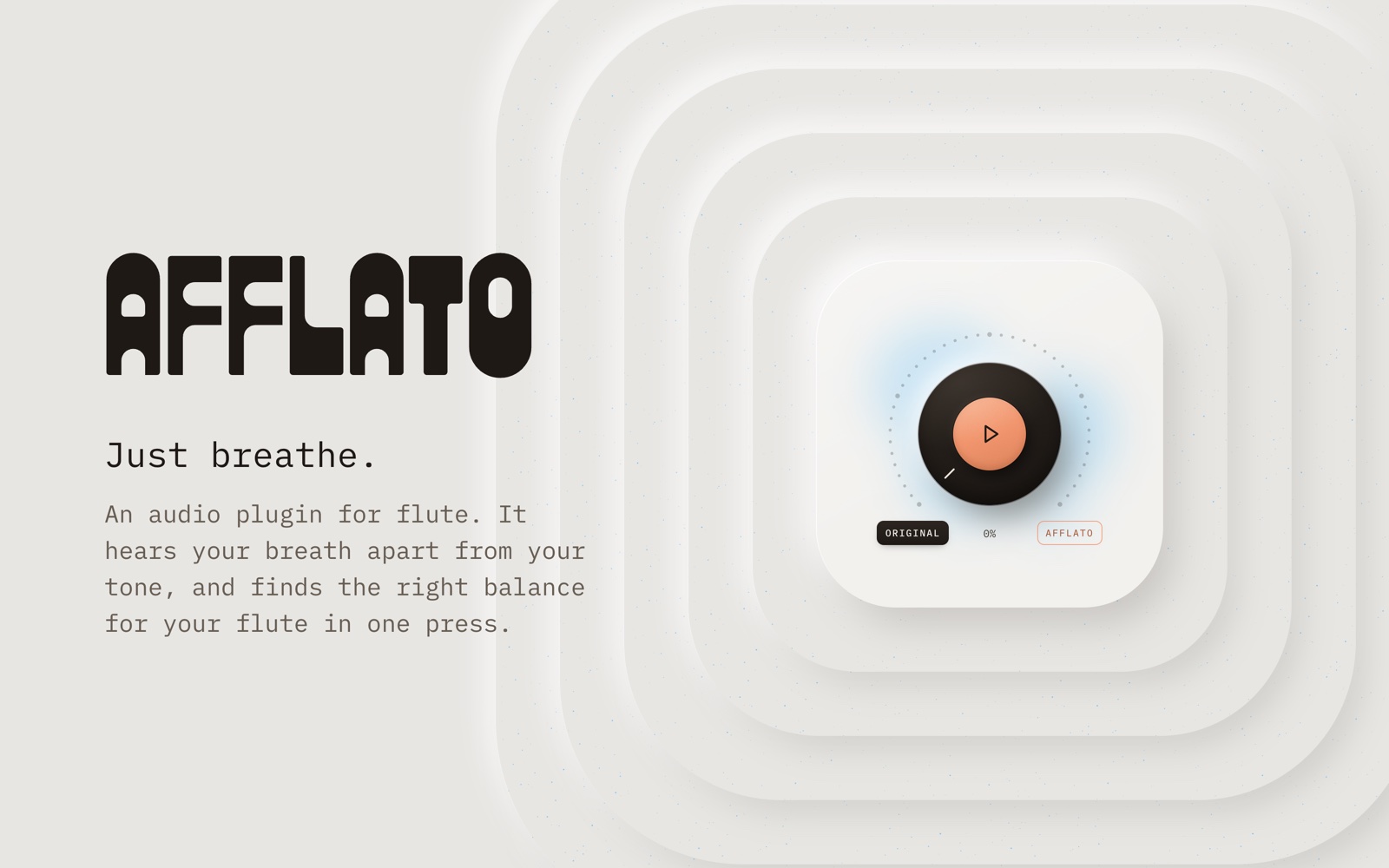
Here's a quena I recorded on a rainy night. Press play, then switch between the original and Afflato.
So yes, it's a business I've started and a product I'll be selling. But before any of that, it's something I use all of the time.
a client of one
I took it on the way I take on every brand. Strategy before a single sketch.
The first truth was a humbling one. Plenty of tools can tell you which note you're playing, and nobody's going to buy a plugin for that. What nothing else did was hear the breath apart from the tone. That became the whole story. Getting there took researching thousands of plugins to find something as useful as it is original.
Then the name. It started as Flutter. Then Flutr. Embouchure. Just Breathe. For a minute it was Frullato, which is a real flute technique. It's also Italian for smoothie, and I'm about to be living in Italy. I wasn't going to spend the rest of my life explaining that one.
So I went looking for Italian words for breath and found Afflato. It comes from the Latin afflatus: a breath blown in. The breath of inspiration. Which is exactly what happened to me in that jungle.
Even the labels had to earn their place. The button that listens to you and sets everything was first called Listen, which said... absolutely nothing. Calibrate sounded like an engineer talking. Soundcheck is what every musician already says before they play. So Soundcheck it was.
soft controls, fine lines
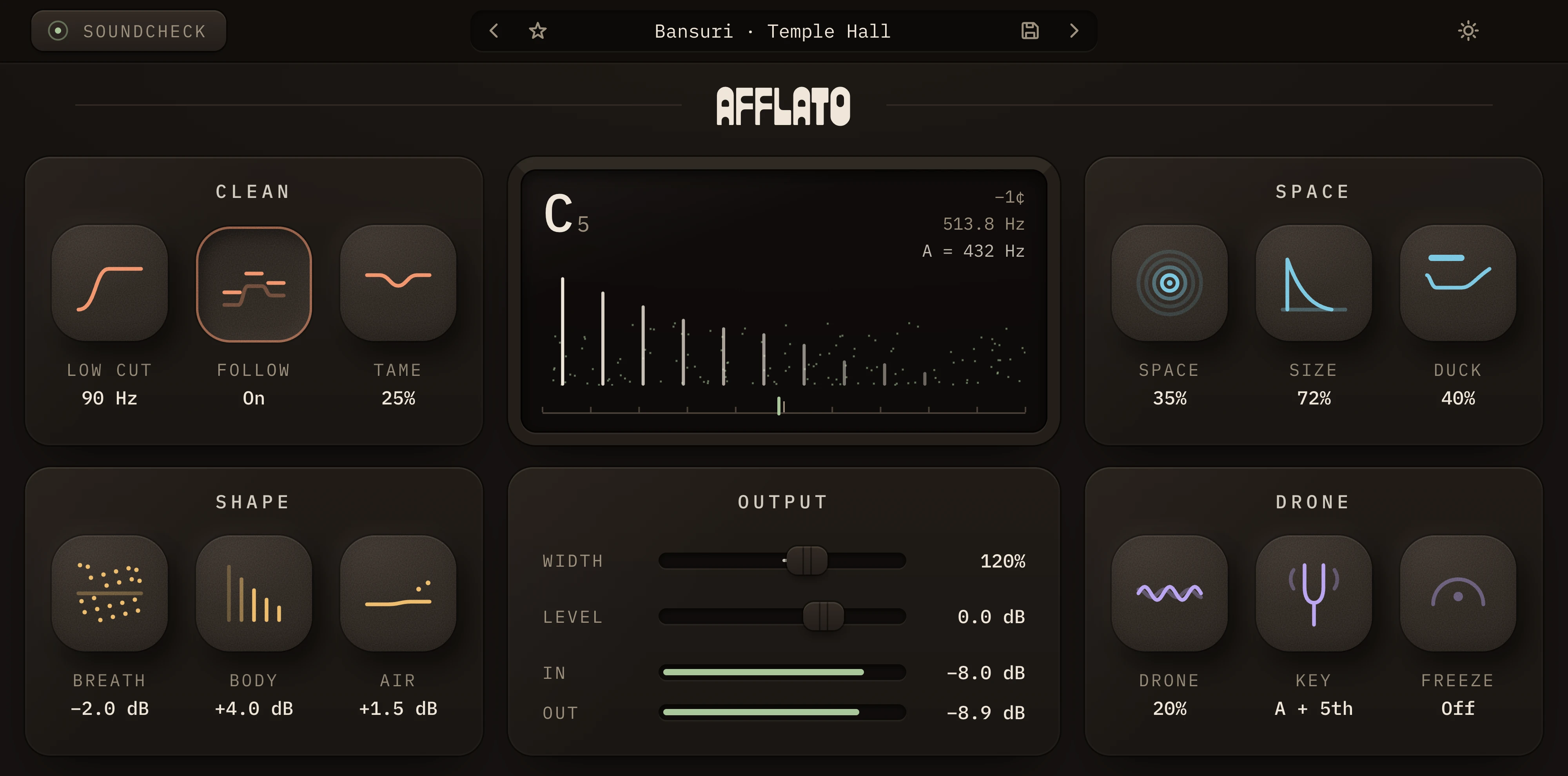
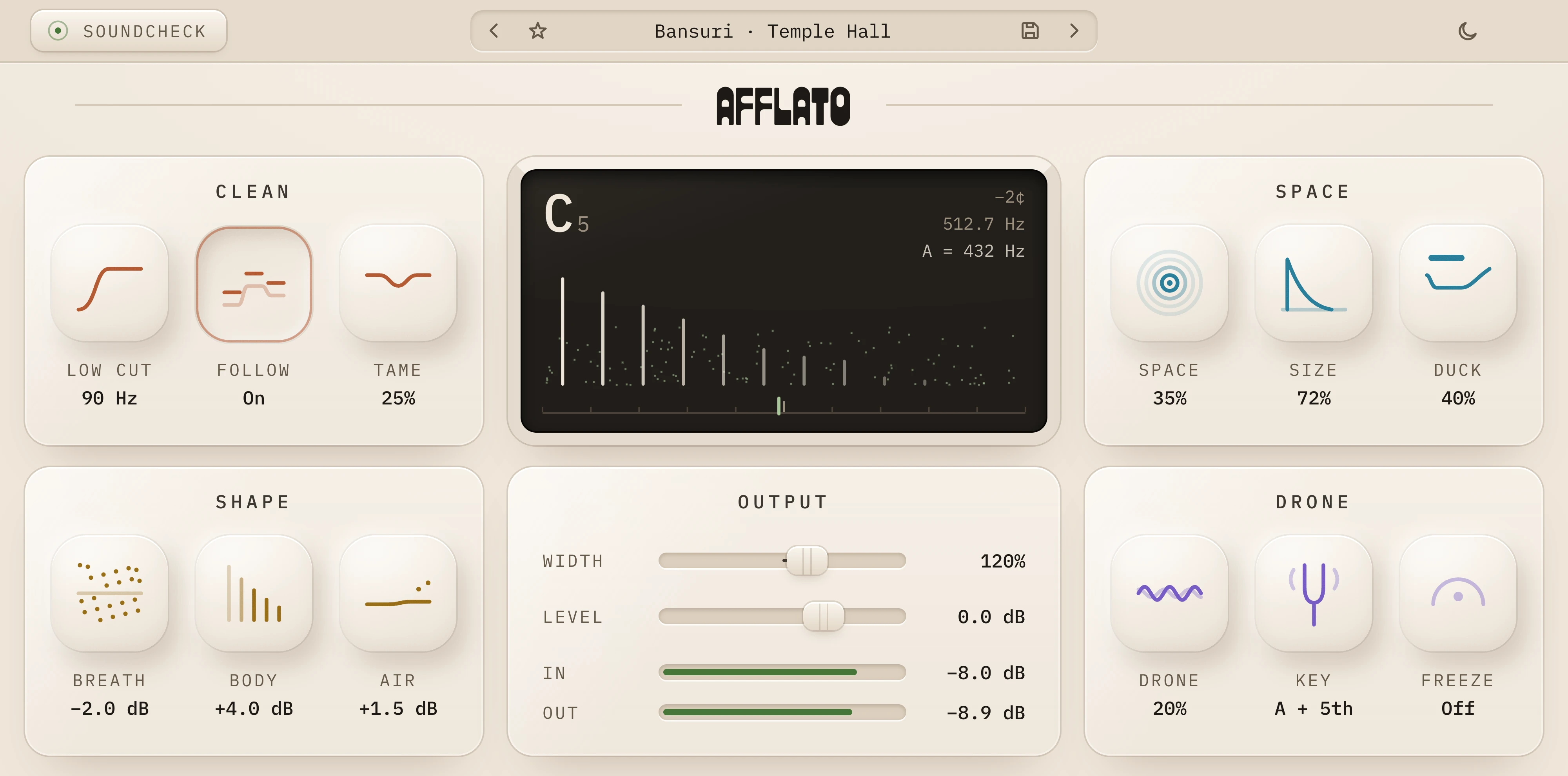
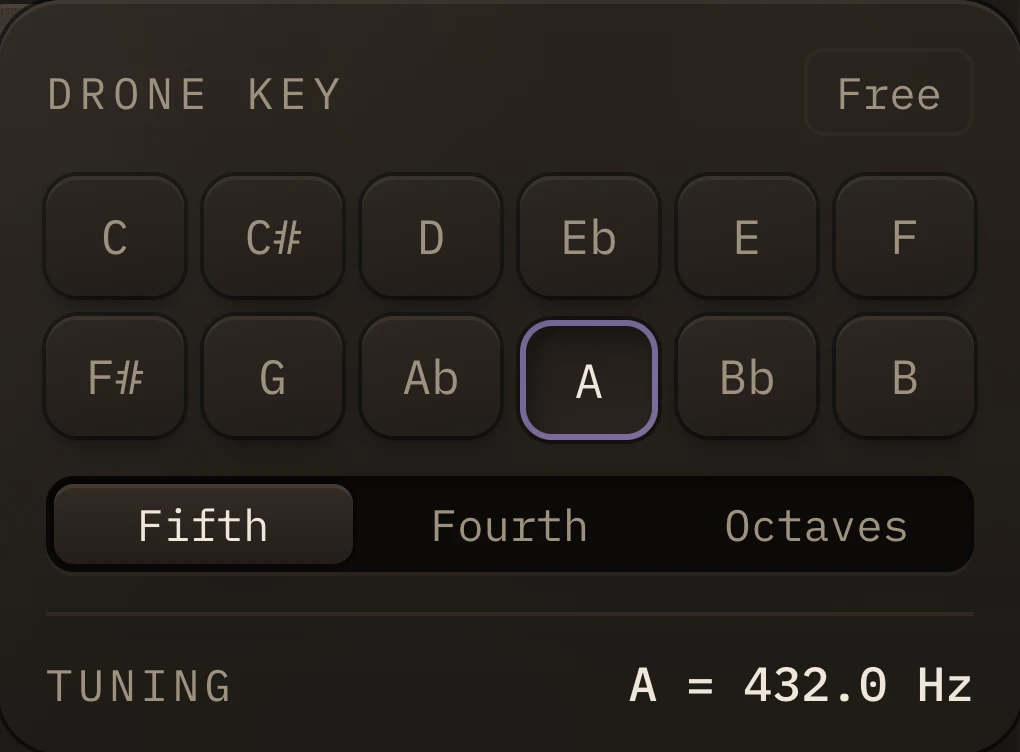
I wanted it to feel like an instrument, not a dashboard. The controls are soft and pressable, like silicone, set against thin lines. The wordmark is set in Activate, a font I designed. Everything else is set in a quiet mono.
In the middle, a little screen shows what you're playing, and the water behind the wordmark ripples with your sound. It's dark by default, with a cream version for daylight.
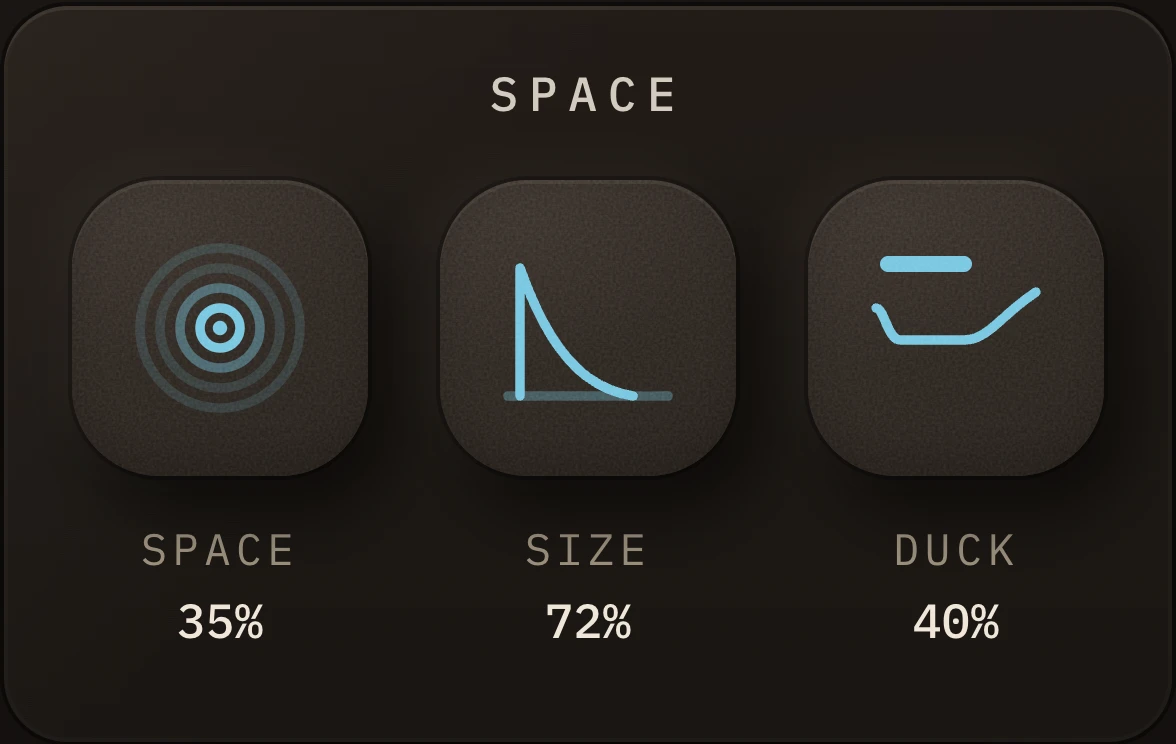
Every control does one thing and says it in a musician's words, not an engineer's.
Presets got the same care. A good one takes time to make, so yours are safe through every update, favorites included.
The website follows the plugin. On the homepage, its knob sits in porcelain, stepped out like ripples. Turn it and you hear one of my quenas go from the original take to Afflato.
just breathe
Afflato is coming soon for Mac. It works inside Ableton, Logic and most other music apps, or on its own. You can hear it on eleven of my flutes and join the list at afflatoaudio.com.
And if you're building something you need yourself, a product, a brand, a tool, I'd love to hear about it. You can reach me at johnnylemoine.com/contact.


